Mukund Lath
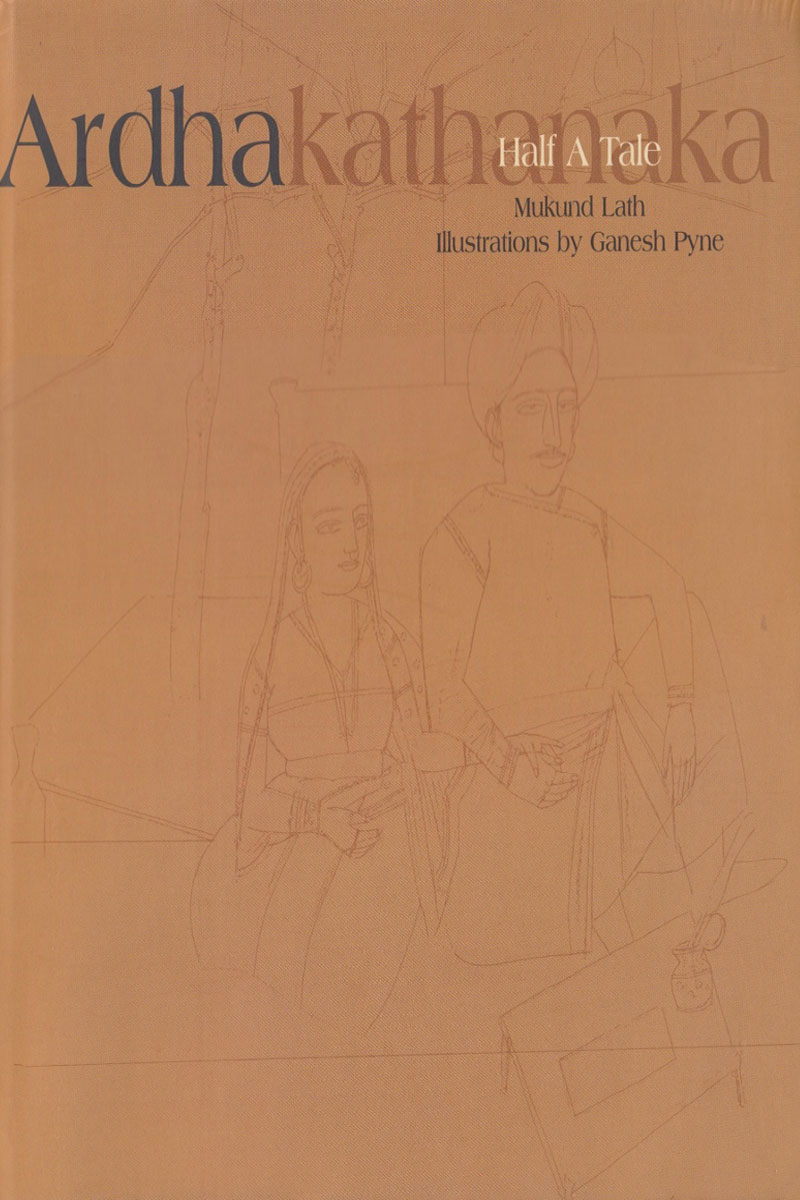
ARDHAKATHANAKA HALF A TALE
Autobiography of a 17th century Jain merchant-poet
The “Ardhakathanaka” is a remarkable work. Written during the heyday of the Mughal rule in 1641 A.D., it is perhaps the only autobiography in the Indian tradition. Banarasi, its author, was evidently working without precedence. Yet he was surprisingly cognizant of the complexity of his task and the depth of introspection it needed.
“A man's life has much that is subtly secret and profoundly beyond grasp. Even within the tiny span of a day he passes through myriad states of consciousness. The Omniscient Tirthankara, perhaps, sees it all, but even he cannot report it in its fullness."
This was his comment at the end of his narrative. Born in a merchant family that had migrated from Rajasthan to Jaunpur in eastern U.P., Banarasi spent an eventful life in many Mughal towns, finally settling in Agra where he wrote "Half a Tale” at the age of 55. He died about two years later.
He was initiated early, at the age of fourteen, into the more earnest pursuits of life when he developed two consuming passions. One was love, for which he went to a prostitute. The other was knowledge, which remained a more lasting Pub pursuit and led him to study books on many subjects, especially religion.
He was drawn to a new, rising protestant movement among the Jains, called Adhyatma, which propagated a contemplative, inward-looking religion. He soon became its leader. With him, the Adhyatma movement grew into an important heterodoxy. The best testimony to his crucial contribution to the movement is that its orthodox opponents named it the "Benarasi Heresy"
The man himself was fascinating. All through life he retained a rare sense of joy and abandon. During his lean period in Agra, when he had no money for his next meal, he yet used to play host every evening to a group of lively friends, singing love ballads and making light-hearted conversation. At the age of 55, as a committed religious leader among the Jains, one of the most solemn and ascetic of religious groups, he still had this irrepressible effervescence of character. "I often break into a dance when I am alone," he confesses at the end of his tale, as he gives his readers a short resume of his “present temper”, adding that he loved to act the jester and could not resist telling tall tales when in the right company.